CHARLESTON Republican U.S. Sen. Tim Scott will seek a third term in 2028, abandoning a long-stated pledge that his 2022 campaign would be his last.
Scott disclosed the decision in an interview with The Post and Courier on March 18, signaling a shift as he takes on a higher-profile role leading Senate Republicans’ campaign efforts.“And I’ll say without any question that as I think about my own reelection in 2028, I think about all the lessons I’ve learned on the campaign trail for all these other candidates, and frankly, even in South Carolina,” Scott told the newspaper, adding, “The more I travel the state, the more I travel the country, the more I realize the important role that we play in the majority.”The announcement from Scott, 60, is a departure from an early promise he made in 2014, shortly after he took the oath of office on the floor of the U.S. Senate.At the time, Scott told reporters from his home state that he favored term limits and would impose one on himself.He promised to finish out the final two years of former U.S. Sen. Jim DeMint’s term and then hoped to be reelected to two, full six-year terms.
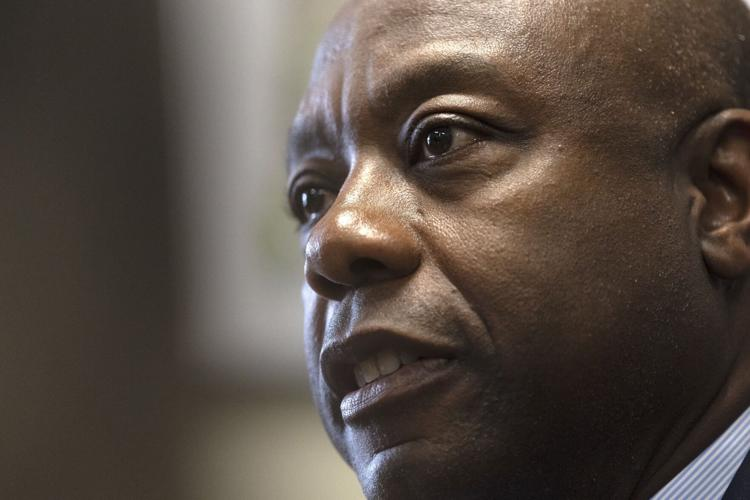
It was a commitment he reaffirmed as recently as 2019 during a “Pints and Politics” appearance sponsored by the newspaper, when he declared at the end of the live question-and-answer session that he had no interest in running for political office after 2022.”I plan to run for reelection, but that will be my last one, if I run,” he said at the time, eliciting gasps and some claps from the audience of more than 250 people.Asked during the March 18 phone interview if he misspoke, Scott said, “Oh no, no. I meant 2028.”Asked if he plans to run again in 2028, Scott further confirmed, “Yes ma’am.”
The news is sure to dash the hopes of any would-be Republican aspirant who had been counting on a potential open race for the Senate seat in 2028.A rising Republican star in his own right, the 60-year-old made history when he became the first African American to serve in both chambers of Congress. He previously served in the U.S. House, where he represented the Lowcountry’s 1st Congressional District from 2011 until former Gov. Nikki Haley appointed him to serve out the rest of DeMint’s term.In South Carolina, he remains an almost unstoppable political force, save for his failed 2024 GOP presidential bid and when he came up short in a 1996 bid for a state senate seat.
The most recent polling from Winthrop University, the state’s most consistent surveyor of voter sentiment, found 62 percent of registered voters approve of the way Scott is handling his job.
Scott’s approval among Republican voters in the Palmetto State stands at 93 percent, the highest of any federal official tested in the November 2025 survey, which included fellow U.S. Sen. Lindsey Graham, R-SC Scott has long sought to expand the GOP’s outreach to minority voters.In the final weeks of the 2024 presidential campaign, Scott was a frequent presence on the campaign trail for top Senate GOP candidates, making trips to battleground states and congratulating the winners openly on social media as results rolled in on election night.He was also floated as a possible running mate before Trump landed on JD Vance to be his No. 2.Scott’s decision would place him within a longstanding Southern tradition that prizes seniority in the Senate as a path to influence.In South Carolina, that pattern is especially pronounced.Republican U.S. Sen. Strom Thurmond served from 1956 to 2003, and U.S. Sen. Fritz Hollings, a Democrat served from 1966 to 2005.Even Graham, who has been in the Senate since 2003, is seeking reelection this year.DeMint, who resigned two years into his second term, is the exception.